Is Kaolin Pectin Safe for Dogs With Loose Stool?
Medically reviewed by Koranda Walsh, VMD, DACVIM (SAIM), DACVP (CP) — For general education — not a substitute for veterinary care.
Kaolin pectin itself is usually low-risk for loose stool, but the bottle in your cabinet may not contain kaolin pectin anymore.

On this page
Here’s the limitation nobody puts on the label: “kaolin pectin” and “Kaopectate” stopped being interchangeable years ago, and most owners reaching into the medicine cabinet don’t know it. That gap is where the real safety question lives.
I read a lot of labels before I read a lot of marketing copy, and this one is a genuinely instructive case. The clay-and-fruit-fiber combination that veterinarians have used for decades is a different animal — chemically and legally — from what’s sold under the same brand name at the drugstore today.
The short version: true kaolin/pectin, the veterinary formulation, is a reasonable low-risk option for uncomplicated loose stool in an otherwise healthy adult dog, and VCA Animal Hospitals notes it works by coating the GI lining and binding some bacteria and toxins in the gut, with constipation as the main thing to watch for. The long version is why you need to check the ingredient panel before you reach for anything with “pectin” printed on the bottle.
Myth: “Kaolin pectin” is one stable, standardized product
It isn’t anymore. Reformulated over-the-counter Kaopectate now uses bismuth subsalicylate as its active ingredient instead of kaolin and pectin, and that’s a meaningfully different drug. dvm360 has flagged the reformulation as a real hazard, because bismuth subsalicylate is chemically related to aspirin — it’s a salicylate — and dogs with aspirin sensitivity, dogs already on an NSAID or steroid, or dogs with kidney or liver disease can run into trouble with it. This isn’t a theoretical labeling quirk. It’s the difference between an inert clay-and-fiber product and a salicylate that gets absorbed systemically.
So the honest answer to “is kaolin pectin safe” splits in two: the veterinary-labeled kaolin/pectin suspension, yes, generally, with normal caveats. The Kaopectate bottle under your sink — read the active ingredient line before you assume it’s the same thing.
Reality: what kaolin and pectin are actually doing in the gut
Kaolin is a naturally occurring clay that acts as an adsorbent — it binds some bacteria, toxins, and excess fluid in the intestinal tract. Pectin is a soluble fiber that can help firm stool consistency as it moves through the colon. Neither ingredient is a cure for whatever’s driving the diarrhea; both are supportive, symptomatic measures. VCA’s client information describes the pairing as generally well tolerated, with the most common downside being constipation if it’s overused, and cautions that formulations built on bismuth salicylate should not be given to dogs with aspirin sensitivities.
That fits the same pattern I see across most GI supportive-care products, not just kaolin/pectin: soluble fiber sources do a real, boring, useful job of firming stool without doing anything to fix an underlying cause. Pumpkin fiber is a similar example — it’s a gentle, natural source of both soluble and insoluble fiber, which is why it shows up in so many home remedies for loose stool. It manages the symptom. It doesn’t diagnose the dog.
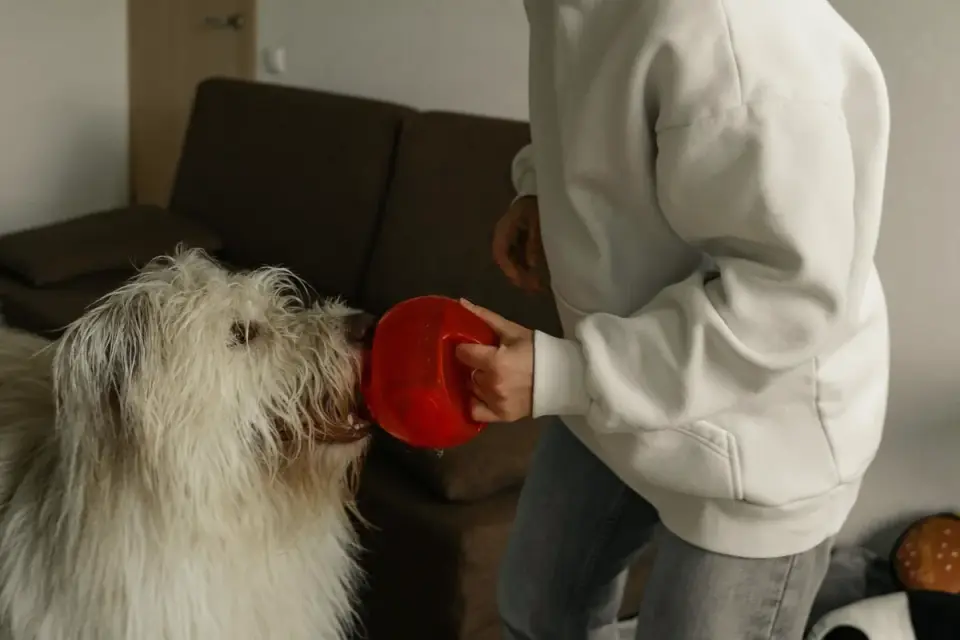
I had a twelve-year-old Cavalier King Charles Spaniel come in a few winters back — an 18-pound dog, otherwise stable on a joint supplement and nothing else — because her stool had gone soft and mucoid over about four days after a boarding stay. The owner had already given her two doses of a bismuth-based anti-diarrheal from the pharmacy, thinking it was the same “kaolin pectin” her old vet used to send home years earlier. It wasn’t. She was also on a low-dose NSAID for arthritis, which is exactly the combination that worries me with a salicylate-based product — GI irritation and bleeding risk stack on top of each other. We ran bloodwork before deciding on anything further, because a dog with new soft stool and an NSAID on board is not a “wait and see” case in my chair; the reference intervals told me her kidney values and platelet count were fine, which changed what I was willing to try next. That’s the sequence I’d want every owner to walk through before dosing anything from the cabinet: read the label, then read the bloodwork, then decide.
The sequence I actually recommend
- Check the active ingredient, not the brand name. If the label says kaolin and pectin, that’s the low-risk option. If it says bismuth subsalicylate, treat it like a salicylate-containing drug — because it is one.
- Rule out the drug interactions that matter. A dog on an NSAID, a steroid, or with existing kidney or liver disease is not a candidate for a bismuth-based product without your vet weighing in first.
- Give it a defined trial window, not an open-ended one. If loose stool hasn’t resolved in a day or two, or if you see blood, lethargy, vomiting, or the dog stops eating, that’s a vet visit, not another dose. For food-transition cases specifically, see what to do when a dog has loose stool after switching foods for a trip.
- Address the underlying gut, not just the stool consistency. If loose stool is a recurring pattern rather than a one-off, a properly dosed, strain-verified probiotic is the more durable tool — see how to tell if a probiotic is working for your dog’s stool and why the CFU number on the bag isn’t the real test.
What this doesn’t cover
Kaolin/pectin, in either its true or reformulated form, is not a treatment for chronic malabsorptive disease. Dogs with exocrine pancreatic insufficiency need pancreatic enzyme replacement therapy, a low-residue moderate-fat diet, and cobalamin supplementation — not an antidiarrheal — and researchers are still working out why dysbiosis persists in some of these dogs even after enzyme therapy starts, according to a review published in the JAVMA: Journal of the American Veterinary Medical Association. That’s a different clinical picture entirely, and it’s worth knowing the difference before you assume a bottle from the pharmacy will hold you over.
For puppies specifically, whose GI tracts are more sensitive to both dehydration and off-label dosing, I’d start with the gentler, food-based approach in how to firm up a puppy’s loose stool naturally before reaching for any adsorbent medication.
A dog who taught me the most about this wasn’t a dramatic case — she was a healthy 4-year-old mixed-breed whose owner had been giving her “the pink stuff” for years for every soft stool, no vet call, no label check. Nothing bad had happened, but nothing bad happening isn’t the same as safe; it’s the same as lucky so far. When we finally looked at what she’d actually been dosing, it was the bismuth reformulation, at a size and frequency that would have been genuinely risky if that dog had ever needed an NSAID for a bad hip. The label had the answer the whole time. Nobody had read it.
Where this leaves you
Kaolin and pectin, correctly identified, are about as low-drama an option as GI supportive care gets. The risk isn’t in the clay or the fruit fiber — it’s in assuming the name on the box still means what it used to. Read the active ingredient before you dose anything, check it against whatever else your dog is already taking, and treat “it’s been fine so far” as an observation, not a safety profile.
Is your dog’s diarrhea a one-off from something she ate, or is it becoming a pattern worth investigating properly?
Frequently asked questions
Is kaolin pectin the same thing as Kaopectate?
Not anymore. Original kaolin/pectin formulations are still used in veterinary products, but the retail Kaopectate brand was reformulated to use bismuth subsalicylate instead, which behaves like a low-dose aspirin in the body.
What's the biggest risk with giving my dog an over-the-counter anti-diarrheal?
The biggest risk is grabbing a bismuth-based product for a dog who's already on an NSAID, steroid, or has kidney or liver disease — the salicylate content can compound those risks. Check the active ingredient label before dosing.
How long should I wait before calling the vet about loose stool?
A day or two of mild, otherwise-well-dog diarrhea is usually reasonable to monitor at home. Blood in the stool, vomiting, lethargy, or a dog that stops eating means it's time for a vet visit, not another dose of an over-the-counter product.
Sources
- Kaolin/Pectin — VCA Animal Hospitals
- Kaopectate reformulation poses danger to cats — dvm360
- Persistent dysbiosis and pancreatic enzyme replacement therapy in exocrine pancreatic insufficiency — JAVMA